January 22, 2011


Most Currepted India


India has been rocked this year by a series of corruption scandals that have embarrassed the ruling Congress party, rattled markets and delayed reform bills as the opposition stalls parliament.
The country, 87th in Transparency International's rankings based on perceived levels of corruption, is no stranger to scandals.
Here are some of the biggest in the last two decades:
2010 - LOAN BRIBERY CASE
The case broke after a year of investigation on Nov. 24 when the Central Bureau of Investigation (CBI) arrested eight people, accusing them of bribery for corporate loans.
The arrests included the chief executive of state-run mortgage lender LIC Housing Finance and senior officials at state-run Central Bank of India, Punjab National Bank and Bank of India.
While the size of the scandal is not yet known, local media have reported it could run into hundreds of millions of dollars.
The CBI is probing 21 companies involved in India's booming infrastructure sector for links, but has not named them.
The bribes were allegedly paid by private finance firm Money Matters Financial Services, which acted as a "mediator and facilitator" for the loan beneficiaries, the CBI said.
Companies whose officials have been arrested have all denied any wrongdoing. Individuals arrested have not yet commented.
Government officials, including ministers, have said this is a case of individual wrongdoing and not a widespread scam.
2010 - TELECOMS LICENCE ROW
Telecoms Minister Andimuthu Raja was sacked after a report by India's state auditor said his ministry sold licences and spectrum below market prices, depriving the government of up to $39 billion in revenues.
The scandal swept up as high as Prime Minister Manmohan Singh, who had to explain to the Supreme Court why he sat on a request for permission to charge Raja with corruption.
In its report, the Comptroller and Auditor General of India (CAG) also said rules were flouted when the licences were given in 2007-08 which led to many ineligible firms getting them.
The CBI has launched an investigation into alleged corruption at the ministry. Nobody has been charged yet and Raja has denied any wrongdoing.
The CAG said Unitech units got licences despite having inadequate capital, Swan Telecom got a licence even though there were monopoly issues and Reliance Communications got undue benefits as it sought permission to offer services under the more popular GSM technology.
Revenue authorities have questioned Nira Radia, a top lobbyist, as part of an investigation into whether money laundering and forex laws were broken when the licences were purchased. Radia has denied any wrongdoing and has said she is cooperating with the probe.
2010 - COMMONWEALTH GAMES
Allegations of corruption over the international sporting event that took place in Delhi in October are being investigated by several bodies including the anti-corruption watchdog, the state auditor, the CBI and a special committee set up by Prime Minister Singh.
The Congress-party led coalition government came under fierce criticism for mismanagement and ineptitude over the sporting extravaganza which cost up to $6 billion.
Allegations of corruption spanned a broad spectrum including issuing of contracts and purchase of equipment -- from treadmills to toilet rolls.
India's anti-corruption watchdog has identified more than 16 projects with possible irregularities.
The Congress party eventually sacked Suresh Kalmadi, chairman of the organising committee, as secretary of the party's parliamentary wing.
Aides have been arrested and local media has said Kalmadi could be arrested once he returns back from a foreign trip.
2010 - HOUSING SCAM
Congress party politicians, bureaucrats and military officials have been accused of taking over land meant for building apartments for war widows. The CBI has begun investigating the case.
Local media say apartments with a value of $1.8 million were sold for as little as $130,000 each in the apartment block, which faces the Arabian Sea in one of the world's most expensive stretches of real estate in Mumbai.
The government has sacked the chief minister of western Maharashtra state, Ashok Chavan, who is a member of Congress.
The apartment block is also being investigated for several violations of norms, including environmental laws and land-use rules.
The government has now effectively taken back permissions allowing owners to occupy the apartments, which are required for water and power supplies, leading to the disconnection of these services.
2009 - SATYAM
The founder of Satyam Computer Services, one of India's top software firms, resigned in January 2009 after admitting profits were falsely inflated for years.
The fraud, estimated at $1 billion, was India's largest corporate scandal and was dubbed "India's Enron".
With clients abandoning it, shares were hammered down to near-penny-stock levels.
The government stepped in to save the firm by appointing a new board of directors and midwifed its sale to Tech Mahindra. The firm is now called Mahindra Satyam.
The founder chairman of Satyam, Ramalinga Raju, and other officials including the then chief executive officer and chief financial officer, were arrested under several charges including fraud. The cases continue in court. The defendants have said they were not involved in the fraud.
1992 - SECURITIES SCAM
Several Indian stockbrokers were accused of siphoning off over 35 billion rupees ($778 million) of funds, mostly from inter-bank transactions, to fuel a rise in the Mumbai stock market in 1992. It involved top officers of state-run and foreign banks and financial institutions, bureaucrats and politicians.
News of the scam led to an over 40 percent fall in shares over two months, wiping millions of dollars from market value.
Harshad Mehta, the main accused, died in 2002, convicted in only one of the many cases filed against him, for misappropriation of funds in a case involving the use of money from the bank account of carmaker Maruti Suzuki for trading in stocks.
Several bank executives were convicted for fraud in allowing bank funds to be used for trading stocks.
1986 - BOFORS GUN DEAL
India's purchase of artillery guns from Swedish firm Bofors in 1986 was rocked by allegations that 640 million rupees ($14.2 million) -- a huge sum then -- was paid as bribes to people close to then prime minister Rajiv Gandhi to swing the deal.
The scandal caused an uproar in parliament, led to a split in the ruling Congress party and the defeat of Gandhi in federal elections in 1989.
Its fallout has stymied India's defence expansion, with officials for years unwilling to take decisions on purchases that could later be probed for corruption.
Amongst the people probed were the London-based Indian business family of the Hindujas, who were later acquitted by a court of any involvement.
The case has dragged on for years without any result.
Common Wealth Games Curruption
India’s Corruption Games 2010
Geopolitical notes from IndiaM D Nalapat
The only two countries in the world that each have a billion-plus population are India and China, and there is corruption in both. However, the difference is that even dishonest officials in China seek ways of implementing approved policies, in the process, earning some money on the side. However, in India, so far as the huge army of corrupt politicians and officials is concerned, the entire objective of decision-making is to earn money. In the process, if some good gets done, that is entirely accidental. So, whereas in China the making of money is a by-product, with the focus being on ensuring results, in the case of India, results are the (rare) by-product. The sole objective behind each decision is to make money, as much of it as is possible.During the first five years of the present Sonia Gandhi-led United Progressive Front government in New Delhi, then Union Finance Minister Palaniappan Chidambaram (now Union Home Minister) greatly increased the powers of the tax collection and regulatory agencies, so that these days, they are as operationally unaccountable to the public as was the case during the years when India was ruled by the East India Company. The stock market regulator - the Securities and Exchange Board of India, or SEBI - passes a slew of orders that either bar some companies from doing any business or help other entities in theirs. On record, there seems to be very little justification for either step, so clearly the actual reasons are such as to be invisible to the naked eye. The Reserve Bank of India (RBI) curries goodwill in financial markets in the European Union (the only location that the RBI’s colonial-era higher-level team respond to) by repeatedly raising interest rates and accelerating the very inflation that they profess to reduce.
The RBI top brass is fully aware that in an economy such as India, with myriad supply distortions, raising the interest rate will have zero effect on price rise. However, acting as a trade union for the big banks (all of whom are happy at the high interest rate regime that covers up their inefficiencies), the RBI ensures that Indian business get forced to pay much higher interest than their overseas competitors. Naturally, overseas entities - the beneficiaries of RBI policies - are filled with admiration for the RBI. A former Governor, Yaga Reddy (who was known for his zeal to raise interest rates) even wrote a book, in which he hinted that but for the daily rising of the sun, every positive thing that had taken place in the Indian economy during his time in office was because of his policies.
A modest man, Reddy Chidambaram paid particular attention to taxes, making the Indian taxpayer the highest tax individual on the planet. For example, thanks to multiple levies, the price of petrol in India is far higher than almost anywhere else in the world. There are several thousand separate taxes in India, much of which gets collected by the Income-tax Department. The “democratic” Chidambaram made sure to ensure that the ordinary citizen (those with no access to Congress Party bigwigs) would have zero rights vis-a-vis the department, which has today become known for its intimidation and extortion of the politically unconnected, labelling individuals as tax-evaders at will, even while turning a blind eye to the Everest-scale corruption within Chidambaram’s own party, something that some zealous officials in London uncovered a few days ago, when they came across details of apparently unmerited payments by the Commonwealth Games organisers to a tiny UK-based company. This revelation was followed by an avalanche of others, that reveal scam after scam in the disbursement of more than $ 5 billion for the Games, an unconscionable luxury in a country where more than 200 million people go to bed hungry even while millions of tones of foodgrain rot in government storage dumps so as to keep market prices high for a few well-connected grain speculators.
Although he was unnaturally quiet during UPA-1 (2004-2009), standing aside while scam after scam took place within the government he headed, the Prime Minister who has emerged after the Congress victory in 2009 is a different person. An honest man himself, Manmohan Singh has refused to allow those guilty to escape exposure. Indeed, several of the most recent revelations of graft within the Commonwealth Games setup in Delhi have come from government channels. These days, more and more VVIPs are being exposed and made accountable for corruption. The PM seems to have decided that enough is enough, and that if he wanted to protect his legacy, he needed to go after the big fish rather than - as sual - toss a few minnows before the public. In what is being termed the 2010 Corruption Games, treadmills were hired for just 45 days for Rs 9 lakh, when even the best costs only Rs 4 lakhs to buy outright. At a huge cost, a blimp will circle the Games Stadia, video graphing the ceremonies. All sorts of unknown entities based abroad have been paid vast sums of money for tasks that even a village idiot could perform with ease. If the media revelations prove to be correct, out of the $5 billion, more than $3 billion may go into the pockets of a few VVIPs.
These are now frantically looking to the Prime Minister to escape with the loot, but indications are that Singh is determined to clean up the rot, even if in the process, some of his own party persons are shown to be corrupt. Although more than $2 billion is supposed to have been spent on Delhi, the reality is that the city still looks as dysfunctional as it used to be. Traffic is a mess, power keeps shutting down, while water gets mixed with sewage before reaching households, presumably a population control device. The only commendable work has been on the Delhi Metro, which has taken on new routes and works with reasonable efficiency. However, the 2010 Commonwealth (sorry, Corruption) Games seems to have become a curse rather than a blessing, in large part because most of the stadia have been situated in the heart of the city. The reason for such a decision was to ensure that VVIPs reach the stadia from their residences in less than 20 minutes, escorted by fleets of police cars. Had the stadia been situated outside crowded areas, the city would not have become the nightmare that it today is, but in India, decisions get taken only for the convenience of VVIPs, of course in the name of the common man. Should the PM manage to succeed in his mission of ensuring that the guilty behind the Games get booked, the nation would owe him an immense debt of gratitude. However, it is still early days, and the pressure for a whitewash is growing.
This columnist has no doubt that the ISI plans and seeks to execute several actions designed to weaken India. However, none of these – even should all succeed - have the same negative effect on India’s prospects as corruption. The philosophy of basing decisions on personal interest and financial greed has permeated the system, even in matters as vital to the nation as Defense procurement. The revelations about the Games only highlights this situation. The only difference between the present day and that of the British Raj is that then, the loot was carried out by foreigners. These days, the dacoits are Indian citizens themselves, of course helping several unscrupulous foreign nationals to make money. Only a handful - such as Manmohan Singh - have remained unaffected by the grime. The question is: can they stem the rot? If India is to become an economic superpower, the PM will need to choose between the interests of the\ common man and that of the VVIPs, and continue on the path he is taking, of seeking accountability. In October, the Commonwealth Games will take place. When it ends, there will still be 200 million people going to bed hungry each night in India.
—The writer is Vice-Chair, Manipal Advanced Research Group, UNESCO Peace Chair & Professor of Geopolitics, Manipal University, Haryana State, India.
Nation Of CURRUPTION
It is a no brainer that Corruption In India is at its rampant best.There is not one section of the society that is spared from it.Corruption in the form of bribery takes the cake and given that it begins at the grass root level makes it even more difficult to monitor and control.The Corruption and Bribery Report published at trak.in earlier , gives a detailed breakdown of the scale of the bribes and the reasons why bribes are given.
The striking though well known findings of the report points out that close to half the bribes are requested by the Government Officials both at the state and national level.The same government personnel who are entrusted with the development of the nation are filling their own pockets.No wonder then the nation’s politicians are the most corrupt lot.

However, it it was only for the petty money minded officials filling their own pockets, the enormity of the bribery might be restricted to a certain level.What if corruption takes the shape of a billion dollar behemoth.According to Management Guru C.K.Prahalad , the cost of corruption to the country might as well exceed Rs. 250,000 crores.
The total spending for the 2009 Lok Sabha elections is pegged at a whopping Rs. 10,000 crore.The breakup of this spending throws up some interesting insights too.
C.K.Prahalad fitting compares politicians with Venture Capitalists :-)
Now, when the government is well aware of crores of amount spent on election campaigns and product like advertisements with politicians selling themselves door to door, why cant regulations be implemented to stop all this waste of money.Why cant the regulatory bodies impose a maximum cap on the amount spent on election campaigns failing which the political party is banned to contest.However, accountability is something that leaves a lot for asking and barring which none of the measures to put a stop to corruption can reap rewards.
It is embarrassing that billions of dollars are being spent on electing leaders who do nothing more than succumbing to taking bribes after getting elected.
The gory facts are for everyone to see but then a solution as usual is not in sight. Can you think of a possible solution to this massive problem?
The striking though well known findings of the report points out that close to half the bribes are requested by the Government Officials both at the state and national level.The same government personnel who are entrusted with the development of the nation are filling their own pockets.No wonder then the nation’s politicians are the most corrupt lot.
However, it it was only for the petty money minded officials filling their own pockets, the enormity of the bribery might be restricted to a certain level.What if corruption takes the shape of a billion dollar behemoth.According to Management Guru C.K.Prahalad , the cost of corruption to the country might as well exceed Rs. 250,000 crores.
The total spending for the 2009 Lok Sabha elections is pegged at a whopping Rs. 10,000 crore.The breakup of this spending throws up some interesting insights too.
- Rs 1,300 crore (Rs 13 billion) by the Election Commission
- Rs 700 crore (Rs 7 billion) by the Centre and state governments
- Rs 8,000 crore (Rs 80 billion) were spent by political parties and individual candidates
C.K.Prahalad fitting compares politicians with Venture Capitalists :-)
Given the risky nature of the investments in elections, politicians as venture capitalists, we can assume, will not settle for less than a 10-fold return.More than spending by individuals and political parties, what i fail to understand is , Why is a 10,000 crore rupee spend needed for carrying out Elections.There can be infrastructure and operational costs, but they can never amount to such alarming numbers.
Now, when the government is well aware of crores of amount spent on election campaigns and product like advertisements with politicians selling themselves door to door, why cant regulations be implemented to stop all this waste of money.Why cant the regulatory bodies impose a maximum cap on the amount spent on election campaigns failing which the political party is banned to contest.However, accountability is something that leaves a lot for asking and barring which none of the measures to put a stop to corruption can reap rewards.
It is embarrassing that billions of dollars are being spent on electing leaders who do nothing more than succumbing to taking bribes after getting elected.
The gory facts are for everyone to see but then a solution as usual is not in sight. Can you think of a possible solution to this massive problem?
May 24, 2010


January 5, 2010
Andra Pradesh peoples In Trouble


Already we are divided in to many relegiions ans states still somebody needs to Split the splitted nations.
Strike banned in RTC for six months
Two days ahead of the indefinite strike proposed in the Andhra Pradesh State Road Transport Corporation (APSRTC) by the employees’ unions from January 6, the State government on Monday imposed a ban on strikes in the undertaking for a period of six months from that date under the Essential Services Maintenance Act.
The unions are demanding a 25 per cent hike in pay-scales as their revision is due from April 2009 under the previous agreements signed by the RTC management with them that provided for a pay revision once every four years. The 25 per cent hike in pay scales, if effected, will impose an additional burden of over Rs. 400 crore on the management, a senior government official said.
The APSRTC management is not ready to accept the demand as the loss suffered by the undertaking so far has reached Rs. 1,100 crore due to various factors, including increase in diesel prices, and another Rs. 150 crore on account of the bandhs and agitations recently over the issue of Telangana State formation.
K. Ratna Prabha, principal secretary, Transport, Roads & Buildings, said the undertaking was in for absorbing heavy financial burden as the services of over 5,000 drivers and conductors were being regularised as decided by the Cabinet recently.
She said the discussions were being held with the representatives of the unions at the RTC management level and the government would step in at a later stage to facilitate an amicable settlement if the dialogue between the two parties enter a deadlock.
Meanwhile, sources said left with no other alternative, the APSRTC management is stated to have proposed a hike in fares by 5 to 8 paise a kilometre in case of ordinary services, 6 to 10 paise for express services and 8 to 12 paise for super deluxe services, to mobilise Rs. 500-750 crore to at least partially wipe out the loss. The government has not yet given its clearance to the proposal.


November 27, 2009


 .

November 24, 2009
Corruption Perceptions Index 2009
The Corruption Perceptions Index (CPI) table shows a country's ranking and score, the number of surveys used to determine
the score, and the confidence range of the scoring.
The rank shows how one country compares to others included in the index. The CPI score indicates the perceived level of
public-sector corruption in a country/territory.
The CPI is based on 13 independent surveys. However, not all surveys include all countries. The surveys used column
indicates how many surveys were relied upon to determine the score for that country.
The confidence range indicates the reliability of the CPI scores and tells us that allowing for a margin of error, we can be 90%
confident that the true score for this country lies within this range.
Rank Country/Territory CPI 2009 Score Surveys Used Confidence Range
1 New Zealand 9.4 6 9.1 - 9.5
2 Denmark 9.3 6 9.1 - 9.5
3 Singapore 9.2 9 9.0 - 9.4
3 Sweden 9.2 6 9.0 - 9.3
5 Switzerland 9.0 6 8.9 - 9.1
6 Finland 8.9 6 8.4 - 9.4
6 Netherlands 8.9 6 8.7 - 9.0
8 Australia 8.7 8 8.3 - 9.0
8 Canada 8.7 6 8.5 - 9.0
8 Iceland 8.7 4 7.5 - 9.4
11 Norway 8.6 6 8.2 - 9.1
12 Hong Kong 8.2 8 7.9 - 8.5
12 Luxembourg 8.2 6 7.6 - 8.8
14 Germany 8.0 6 7.7 - 8.3
14 Ireland 8.0 6 7.8 - 8.4
16 Austria 7.9 6 7.4 - 8.3
17 Japan 7.7 8 7.4 - 8.0
17 United Kingdom 7.7 6 7.3 - 8.2
19 United States 7.5 8 6.9 - 8.0
20 Barbados 7.4 4 6.6 - 8.2
21 Belgium 7.1 6 6.9 - 7.3
22 Qatar 7.0 6 5.8 - 8.1
CPI 2009 Table/2009/cpi/surveys_indices/policy_research http://www.transparency.org/layout/set/print/policy_research/surveys_ind...
1 of 6 11/25/2009 4:56 AM
22 Saint Lucia 7.0 3 6.7 - 7.5
24 France 6.9 6 6.5 - 7.3
25 Chile 6.7 7 6.5 - 6.9
25 Uruguay 6.7 5 6.4 - 7.1
27 Cyprus 6.6 4 6.1 - 7.1
27 Estonia 6.6 8 6.1 - 6.9
27 Slovenia 6.6 8 6.3 - 6.9
30 United Arab Emirates 6.5 5 5.5 - 7.5
31 Saint Vincent and the Grenadines 6.4 3 4.9 - 7.5
32 Israel 6.1 6 5.4 - 6.7
32 Spain 6.1 6 5.5 - 6.6
34 Dominica 5.9 3 4.9 - 6.7
35 Portugal 5.8 6 5.5 - 6.2
35 Puerto Rico 5.8 4 5.2 - 6.3
37 Botswana 5.6 6 5.1 - 6.3
37 Taiwan 5.6 9 5.4 - 5.9
39 Brunei Darussalam 5.5 4 4.7 - 6.4
39 Oman 5.5 5 4.4 - 6.5
39 Korea (South) 5.5 9 5.3 - 5.7
42 Mauritius 5.4 6 5.0 - 5.9
43 Costa Rica 5.3 5 4.7 - 5.9
43 Macau 5.3 3 3.3 - 6.9
45 Malta 5.2 4 4.0 - 6.2
46 Bahrain 5.1 5 4.2 - 5.8
46 Cape Verde 5.1 3 3.3 - 7.0
46 Hungary 5.1 8 4.6 - 5.7
49 Bhutan 5.0 4 4.3 - 5.6
49 Jordan 5.0 7 3.9 - 6.1
49 Poland 5.0 8 4.5 - 5.5
52 Czech Republic 4.9 8 4.3 - 5.6
52 Lithuania 4.9 8 4.4 - 5.4
54 Seychelles 4.8 3 3.0 - 6.7
55 South Africa 4.7 8 4.3 - 4.9
56 Latvia 4.5 6 4.1 - 4.9
56 Malaysia 4.5 9 4.0 - 5.1
56 Namibia 4.5 6 3.9 - 5.1
CPI 2009 Table/2009/cpi/surveys_indices/policy_research http://www.transparency.org/layout/set/print/policy_research/surveys_ind...
2 of 6 11/25/2009 4:56 AM
56 Samoa 4.5 3 3.3 - 5.3
56 Slovakia 4.5 8 4.1 - 4.9
61 Cuba 4.4 3 3.5 - 5.1
61 Turkey 4.4 7 3.9 - 4.9
63 Italy 4.3 6 3.8 - 4.9
63 Saudi Arabia 4.3 5 3.1 - 5.3
65 Tunisia 4.2 6 3.0 - 5.5
66 Croatia 4.1 8 3.7 - 4.5
66 Georgia 4.1 7 3.4 - 4.7
66 Kuwait 4.1 5 3.2 - 5.1
69 Ghana 3.9 7 3.2 - 4.6
69 Montenegro 3.9 5 3.5 - 4.4
71 Bulgaria 3.8 8 3.2 - 4.5
71 FYR Macedonia 3.8 6 3.4 - 4.2
71 Greece 3.8 6 3.2 - 4.3
71 Romania 3.8 8 3.2 - 4.3
75 Brazil 3.7 7 3.3 - 4.3
75 Colombia 3.7 7 3.1 - 4.3
75 Peru 3.7 7 3.4 - 4.1
75 Suriname 3.7 3 3.0 - 4.7
79 Burkina Faso 3.6 7 2.8 - 4.4
79 China 3.6 9 3.0 - 4.2
79 Swaziland 3.6 3 3.0 - 4.7
79 Trinidad and Tobago 3.6 4 3.0 - 4.3
83 Serbia 3.5 6 3.3 - 3.9
84 El Salvador 3.4 5 3.0 - 3.8
84 Guatemala 3.4 5 3.0 - 3.9
84 india 3.4 10 3.2 - 3.6
84 Panama 3.4 5 3.1 - 3.7
84 Thailand 3.4 9 3.0 - 3.8
89 Lesotho 3.3 6 2.8 - 3.8
89 Malawi 3.3 7 2.7 - 3.9
89 Mexico 3.3 7 3.2 - 3.5
89 Moldova 3.3 6 2.7 - 4.0
89 Morocco 3.3 6 2.8 - 3.9
89 Rwanda 3.3 4 2.9 - 3.7
CPI 2009 Table/2009/cpi/surveys_indices/policy_research http://www.transparency.org/layout/set/print/policy_research/surveys_ind...
3 of 6 11/25/2009 4:56 AM
95 Albania 3.2 6 3.0 - 3.3
95 Vanuatu 3.2 3 2.3 - 4.7
97 Liberia 3.1 3 1.9 - 3.8
97 Sri Lanka 3.1 7 2.8 - 3.4
99 Bosnia and Herzegovina 3.0 7 2.6 - 3.4
99 Dominican Republic 3.0 5 2.9 - 3.2
99 Jamaica 3.0 5 2.8 - 3.3
99 Madagascar 3.0 7 2.8 - 3.2
99 Senegal 3.0 7 2.5 - 3.6
99 Tonga 3.0 3 2.6 - 3.3
99 Zambia 3.0 7 2.8 - 3.2
106 Argentina 2.9 7 2.6 - 3.1
106 Benin 2.9 6 2.3 - 3.4
106 Gabon 2.9 3 2.6 - 3.1
106 Gambia 2.9 5 1.6 - 4.0
106 Niger 2.9 5 2.7 - 3.0
111 Algeria 2.8 6 2.5 - 3.1
111 Djibouti 2.8 4 2.3 - 3.2
111 Egypt 2.8 6 2.6 - 3.1
111 Indonesia 2.8 9 2.4 - 3.2
111 Kiribati 2.8 3 2.3 - 3.3
111 Mali 2.8 6 2.4 - 3.2
111 Sao Tome and Principe 2.8 3 2.4 - 3.3
111 Solomon Islands 2.8 3 2.3 - 3.3
111 Togo 2.8 5 1.9 - 3.9
120 Armenia 2.7 7 2.6 - 2.8
120 Bolivia 2.7 6 2.4 - 3.1
120 Ethiopia 2.7 7 2.4 - 2.9
120 Kazakhstan 2.7 7 2.1 - 3.3
120 Mongolia 2.7 7 2.4 - 3.0
120 Vietnam 2.7 9 2.4 - 3.1
126 Eritrea 2.6 4 1.6 - 3.8
126 Guyana 2.6 4 2.5 - 2.7
126 Syria 2.6 5 2.2 - 2.9
126 Tanzania 2.6 7 2.4 - 2.9
130 Honduras 2.5 6 2.2 - 2.8
CPI 2009 Table/2009/cpi/surveys_indices/policy_research http://www.transparency.org/layout/set/print/policy_research/surveys_ind...
4 of 6 11/25/2009 4:56 AM
130 Lebanon 2.5 3 1.9 - 3.1
130 Libya 2.5 6 2.2 - 2.8
130 Maldives 2.5 4 1.8 - 3.2
130 Mauritania 2.5 7 2.0 - 3.3
130 Mozambique 2.5 7 2.3 - 2.8
130 Nicaragua 2.5 6 2.3 - 2.7
130 Nigeria 2.5 7 2.2 - 2.7
130 Uganda 2.5 7 2.1 - 2.8
139 Bangladesh 2.4 7 2.0 - 2.8
139 Belarus 2.4 4 2.0 - 2.8
139 Pakistan 2.4 7 2.1 - 2.7
139 Philippines 2.4 9 2.1 - 2.7
143 Azerbaijan 2.3 7 2.0 - 2.6
143 Comoros 2.3 3 1.6 - 3.3
143 Nepal 2.3 6 2.0 - 2.6
146 Cameroon 2.2 7 1.9 - 2.6
146 Ecuador 2.2 5 2.0 - 2.5
146 Kenya 2.2 7 1.9 - 2.5
146 Russia 2.2 8 1.9 - 2.4
146 Sierra Leone 2.2 5 1.9 - 2.4
146 Timor-Leste 2.2 5 1.8 - 2.6
146 Ukraine 2.2 8 2.0 - 2.6
146 Zimbabwe 2.2 7 1.7 - 2.8
154 Côte d´Ivoire 2.1 7 1.8 - 2.4
154 Papua New Guinea 2.1 5 1.7 - 2.5
154 Paraguay 2.1 5 1.7 - 2.5
154 Yemen 2.1 4 1.6 - 2.5
158 Cambodia 2.0 8 1.8 - 2.2
158 Central African Republic 2.0 4 1.9 - 2.2
158 Laos 2.0 4 1.6 - 2.6
158 Tajikistan 2.0 8 1.6 - 2.5
162 Angola 1.9 5 1.8 - 1.9
162 Congo Brazzaville 1.9 5 1.6 - 2.1
162 Democratic Republic of Congo 1.9 5 1.7 - 2.1
162 Guinea-Bissau 1.9 3 1.8 - 2.0
162 Kyrgyzstan 1.9 7 1.8 - 2.1
CPI 2009 Table/2009/cpi/surveys_indices/policy_research http://www.transparency.org/layout/set/print/policy_research/surveys_ind...
5 of 6 11/25/2009 4:56 AM
IN DEPTH JOIN THE DISCUSSION MULTIMEDIA PRESS
162 Venezuela 1.9 7 1.8 - 2.0
168 Burundi 1.8 6 1.6 - 2.0
168 Equatorial Guinea 1.8 3 1.6 - 1.9
168 Guinea 1.8 5 1.7 - 1.8
168 Haiti 1.8 3 1.4 - 2.3
168 Iran 1.8 3 1.7 - 1.9
168 Turkmenistan 1.8 4 1.7 - 1.9
174 Uzbekistan 1.7 6 1.5 - 1.8
175 Chad 1.6 6 1.5 - 1.7
176 Iraq 1.5 3 1.2 - 1.8
176 Sudan 1.5 5 1.4 - 1.7
178 Myanmar 1.4 3 0.9 - 1.8
179 Afghanistan 1.3 4 1.0 - 1.5
180 Somalia 1.1 3 0.9 - 1.4
Transparency International e.V. copyright © 1994-2009
CPI 2009 Table/2009/cpi/surveys_indices/policy_research http://www.transparency.org/layout/set/print/policy_research/surveys_ind...
6 of 6 11/25/2009 4:56 AM
November 23, 2009
My India My pride - here very few points to Proud to be an Indian
* India never invaded any country in her last 100000 years of history.
* When many cultures were only nomadic forest dwellers over 5000 years ago, Indians established Harappan culture in Sindhu Valley (Indus Valley Civilization)
* The name 'India' is derived from the River Indus, the valleys around which were the home of the early settlers. The Aryan worshippers referred to the river Indus as the Sindhu.
* The Persian invaders converted it into Hindu. The name 'Hindustan' combines Sindhu and Hindu and thus refers to the land of the Hindus.
* Chess was invented in India.
* Algebra, Trigonometry and Calculus are studies, which originated in India.
* The 'Place Value System' and the 'Decimal System' were developed in India in 100 B.C.
* The World's First Granite Temple is the Brihadeswara Temple at Tanjavur, Tamil Nadu. The shikhara of the temple is made from a single 80-tonne piece of granite. This magnificent temple was built in just five years, (between 1004 AD and 1009 AD) during the reign of Rajaraja Chola.
* India is the largest democracy in the world, the 6th largest Country in the world, and one of the most ancient civilizations.
* The game of Snakes & Ladders was created by the 13th century poet saint Gyandev. It was originally called 'Mokshapat'. The ladders in the game represented virtues and the snakes indicated vices. The game was played with cowrie shells and dices. In time, the game underwent several modifications, but its meaning remained the same, i.e. good deeds take people to heaven and evil to a cycle of re-births.
* The world's highest cricket ground is in Chail, Himachal Pradesh. Built in 1893 after leveling a hilltop, this cricket pitch is 2444 meters above sea level.
* India has the largest number of Post Offices in the world.
* The largest employer in the world is the Indian Railways, employing over a million people.
* The world's first university was established in Takshila in 700 BC. More than 10,500 students from all over the world studied more than 60 subjects. The University of Nalanda built in the 4th century was one of the greatest achievements of ancient India in the field of education.
* Ayurveda is the earliest school of medicine known to mankind. The Father of Medicine, Charaka, consolidated Ayurveda 2500 years ago.
* India was one of the richest countries till the time of British rule in the early 17th Century. Christopher Columbus, attracted by India's wealth, had come looking for a sea route to India when he discovered America by mistake.
* The Art of Navigation & Navigating was born in the river Sindh over 6000 years ago. The very word Navigation is derived from the Sanskrit word 'NAVGATIH'. The word navy is also derived from the Sanskrit word 'Nou'.
* Bhaskaracharya rightly calculated the time taken by the earth to orbit the Sun hundreds of years before the astronomer Smart. According to his calculation, the time taken by the Earth to orbit the Sun was 365.258756484 days.
* The value of "pi" was first calculated by the Indian Mathematician Budhayana, and he explained the concept of what is known as the Pythagorean Theorem. He discovered this in the 6th century, long before the European mathematicians.
* Algebra, Trigonometry and Calculus also originated in India.Quadratic Equations were used by Sridharacharya in the 11th century. The largest numbers the Greeks and the Romans used were 106 whereas Hindus used numbers as big as 10*53 (i.e. 10 to the power of 53) with specific names as early as 5000 B.C.during the Vedic period.Even today, the largest used number is Terra: 10*12(10 to the power of 12).
* Until 1896, India was the only source of diamonds in the world
(Source: Gemological Institute of America).
* The Baily Bridge is the highest bridge in the world. It is located in the Ladakh valley between the Dras and Suru rivers in the Himalayan mountains. It was built by the Indian Army in August 1982.
* Sushruta is regarded as the Father of Surgery. Over2600 years ago Sushrata & his team conducted complicated surgeries like cataract, artificial limbs, cesareans, fractures, urinary stones, plastic surgery and brain surgeries.
* Usage of anaesthesia was well known in ancient Indian medicine. Detailed knowledge of anatomy, embryology, digestion, metabolism,physiology, etiology, genetics and immunity is also found in many ancient Indian texts.
* India exports software to 90 countries.
* The four religions born in India - Hinduism, Buddhism, Jainism, and Sikhism, are followed by 25% of the world's population.
* Jainism and Buddhism were founded in India in 600 B.C. and 500 B.C. respectively.
* Islam is India's and the world's second largest religion.
* There are 300,000 active mosques in India, more than in any other country, including the Muslim world.
* The oldest European church and synagogue in India are in the city of Cochin. They were built in 1503 and 1568 respectively.
* Jews and Christians have lived continuously in India since 200 B.C. and 52 A.D. respectively
* The largest religious building in the world is Angkor Wat, a Hindu Temple in Cambodia built at the end of the 11th century.
* The Vishnu Temple in the city of Tirupathi built in the 10th century, is the world's largest religious pilgrimage destination. Larger than either Rome or Mecca, an average of 30,000 visitors donate $6 million (US) to the temple everyday.
* Sikhism originated in the Holy city of Amritsar in Punjab. Famous for housing the Golden Temple, the city was founded in 1577.
* Varanasi, also known as Benaras, was called "the Ancient City" when Lord Buddha visited it in 500 B.C., and is the oldest, continuously inhabited city in the world today.
* India provides safety for more than 300,000 refugees originally from Sri Lanka, Tibet, Bhutan, Afghanistan and Bangladesh, who escaped to flee religious and political persecution.
* His Holiness, the Dalai Lama, the exiled spiritual leader of Tibetan Buddhists, runs his government in exile from Dharmashala in northern India.
* Martial Arts were first created in India, and later spread to Asia by Buddhist missionaries.
* Yoga has its origins in India and has existed for over 5,000 years.
November 21, 2009


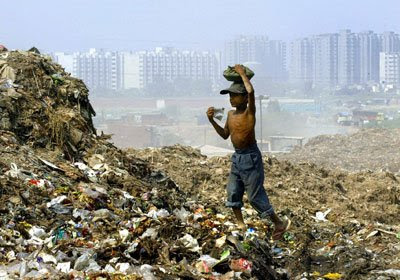
CROWD
SEE OUR CITIZENS STRUGELLING TO LIVE IN THIS DEMOCRACY INDIA.
IF ANY ONE OF THEM FALLS DOWN NOT ONLY HE ALONE WILL FALL BUT ALSO HIS FAMILY AND THIS COUNTRY WILL LOOSE A CITIZEN.

IF ANY ONE OF THEM FALLS DOWN NOT ONLY HE ALONE WILL FALL BUT ALSO HIS FAMILY AND THIS COUNTRY WILL LOOSE A CITIZEN.
Subscribe to:
Posts (Atom)
This figure is based on extrapolating the fee received for 3G to 2G. I doubt if biddrs would have paid as much for an earlier generation technology. And had they paid an extra $40B for 2G, they wouldn't have had resources to bid so high for 3G.
Few of those who obtained 2G licenses promptly sold it to others at 10x the price. I would say that this difference is the real loss that 2G has caued to the govt and citizens of India.
This figure is closer to Rs.10,000 crore or $2.25B.
Not that this excuses the corrupt, but then the scale is far less scandalous.
The Press in India has been sensationalising news of late.
Corruption Tops Indian Minds
Country
Issue
Persons share
India
Corruption
69 %
China
Climate Change
68%
Pakistan
Terrorism
64%
US, UK
State of Global Economy
61%
Russia
Extreme Hunger/Poverty
59%
Source: Times of India, 11 December, 2010